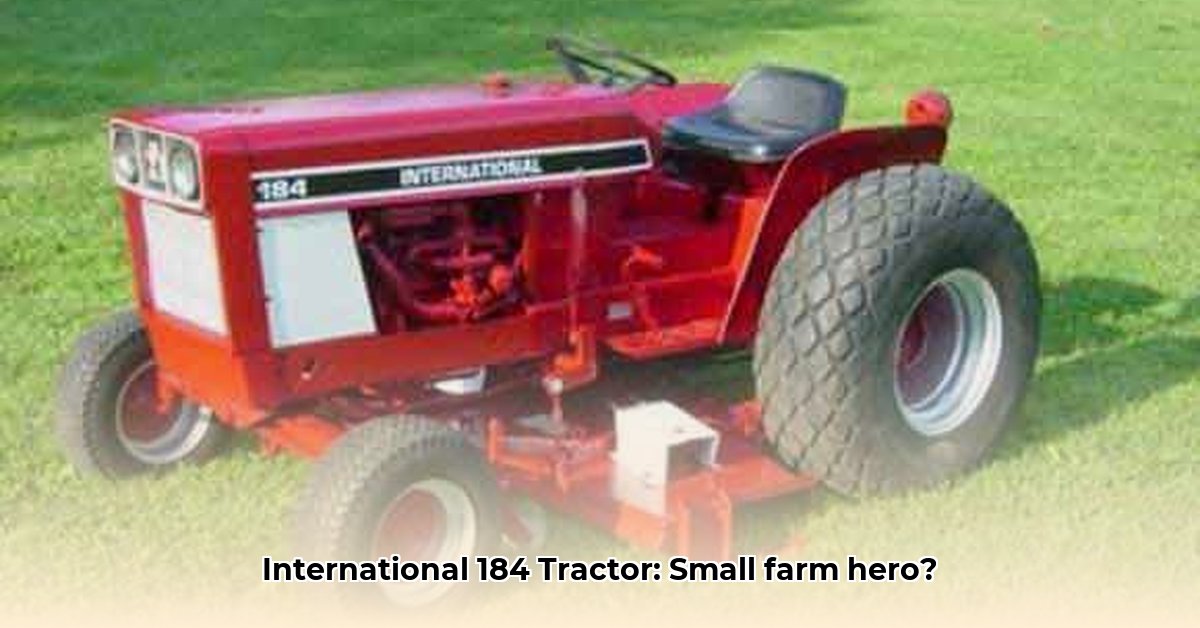
The International Harvester 184, affectionately known as the "Lo-Boy," is a vintage tractor with a loyal following. Built between 1977 and 1980, its compact design and simple mechanics make it an intriguing option for modern sustainable small-scale farming. But can this classic machine truly compete with modern, fuel-efficient tractors? Let's examine its strengths and weaknesses to answer this crucial question. For more information on Case IH tractors, visit the Case IH website.
International 184 Tractor: A Closer Look
The International 184 Lo-Boy is a far cry from modern behemoths. Its relatively low horsepower and compact size make it perfect for smaller farms or specific tasks on larger ones. Powered by a gasoline engine (a design many find easy to maintain), it features a robust transmission and hydraulic system, though its lift capacity is modest compared to contemporary models. Horsepower varies slightly depending on the specific model, so always check original specifications. Think of it as a nimble, hardworking tool prioritising manoeuvrability over brute force. Isn't this adaptability a significant factor for sustainable farmers seeking versatility?
Soil Health and the 184: A Gentle Touch
One significant advantage of the 184 is its light weight. This is a boon for soil health, as heavier tractors tend to compact the soil, reducing water absorption and overall soil structure. The Lo-Boy's gentler approach promotes healthier soil, leading to potentially better yields. However, its lighter weight means tasks might take longer compared to more powerful tractors. This highlights a critical trade-off: soil health versus efficiency. Is the longer working time offset by the improved soil health?
Fuel Efficiency: A Modern Imperative
The 184's gasoline engine, while mechanically simple, is not fuel-efficient by today's standards. Precise fuel consumption figures per acre are difficult to obtain, hindering a comprehensive comparison with modern alternatives. This lack of data is a concern. How can we truly assess the 184's environmental impact without reliable fuel consumption data? Further research is needed to fill this crucial gap.
Adaptability: A Jack-of-All-Trades
A key strength of the 184 is its versatility. With appropriate attachments, it transforms from a tiller to a mower, snow blower, or even a small loader. This adaptability is invaluable for resource-conscious small farms. Having one machine for multiple tasks significantly reduces costs and storage space. Isn't this versatility a compelling argument for budget-minded sustainable farmers?
Maintenance: The Reality of Vintage Machinery
The 184’s age presents both charm and challenges. Finding parts can be more difficult than for newer tractors, and repairs may prove more costly. The machine's lifespan and repair frequency are significant factors. We must weigh long-term maintenance costs against the initial purchase price. Online communities dedicated to vintage International Harvester tractors are invaluable resources for troubleshooting and parts sourcing. Does the potential for higher maintenance costs outweigh the other benefits for you?
The International 184 and Sustainable Farming: A Balanced Verdict
The International 184 Lo-Boy offers undeniable appeal, but its age is a factor. Modern compact tractors often boast superior fuel efficiency, higher power output, and lower emissions. However, the 184's minimal soil compaction and versatility make it appealing to those prioritizing these aspects on smaller farms. It isn't a universal solution; its suitability depends heavily on the context of its use.
Pros and Cons: A Comparative Overview
| Pros | Cons |
|---|---|
| Minimal soil compaction | Lower power output |
| Versatile, adaptable | Lower fuel efficiency |
| Relatively simple mechanical design | Parts sourcing & repair costs may be higher |
| Potential for restoration & upgrades | Lacks modern conveniences (e.g., advanced hydraulics) |
| Lower initial purchase price (likely) | Higher long-term maintenance costs (potential) |
Ultimately, the decision hinges on your individual circumstances. Carefully weigh the pros and cons; consider your farm's size, tasks, and mechanical abilities before investing. Consult a knowledgeable mechanic for expert advice.
Key Takeaways: Making Informed Decisions
- The International 184 Lo-Boy is a niche option for specific small-scale agricultural needs. Its compact design and ease of maintenance are distinct advantages.
- Fuel efficiency requires careful monitoring and calculation, necessitating a thorough understanding of operational costs.
- Regular maintenance is paramount for maximizing its lifespan and fuel economy.
- Assess your specific needs and workload before purchasing an International Harvester 184 Lo-Boy. Careful consideration is crucial for making an informed decision.